Huntington Beach
Surf City with working-class roots and political edge
At a Glance
Huntington Beach is Surf City USA, and it takes that identity seriously. The pier is iconic. The beach is excellent. And underneath the sunny beach town exterior is a city with distinct working-class roots, strong political convictions (mostly conservative), and an actual surfing culture that hasn't been completely erased by tourism.
This is not an aspirational beach town like Laguna Beach. It's a real beach city where surfers still outnumber Instagram visitors, where there's an oil derrick visible from the pier, and where the political climate can feel aggressively provincial. But if you want a beach lifestyle without the performative aesthetic of more upscale coastal towns, Huntington Beach delivers authenticity and relatively accessible beach living.
The Big Picture
Huntington Beach's identity was forged in oil and surfing. The oil business made it wealthy in the 1920s–1980s, and that industrial heritage never fully left. The surfing culture emerged through the late 1950s, 1960s, and 1970s and is still genuine today. The city council adopted the Surf City nickname in 1991, the Surf City USA trademark followed in the 2000s, and the city has doubled down on that identity ever since. The U.S. Open of Surfing is the cultural anchor: a major international surfing competition that brings legitimacy to the city's claims.
Politically, Huntington Beach skews conservative in a way that's visible in local governance and city council elections. It has a blue-collar, working-class character that distinguishes it from more affluent OC coastal towns. Pricing is generally lower than Newport or Laguna, and the culture feels more accessible. But this is changing gradually as real estate prices climb and younger professionals move in.
The Highlights
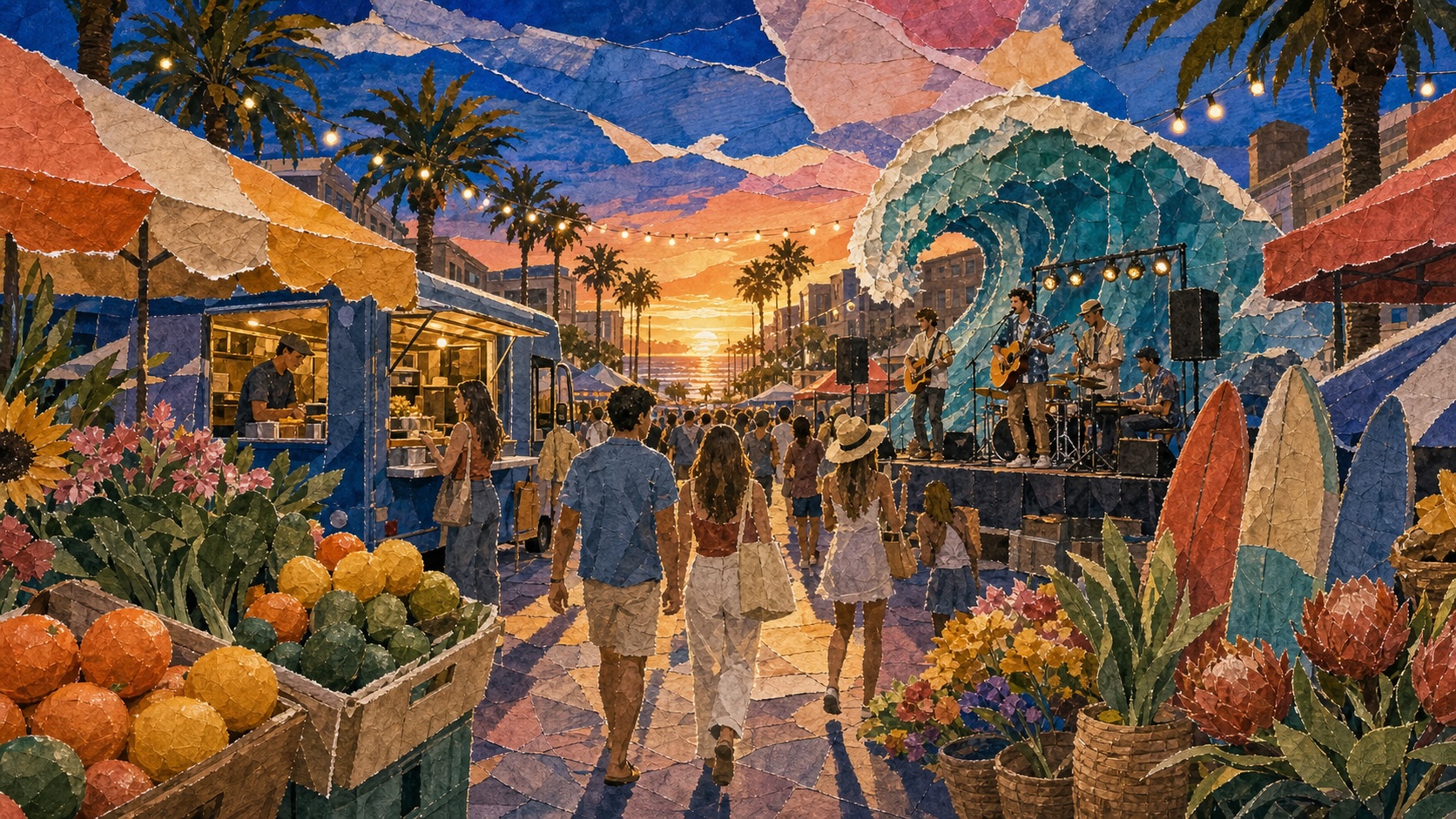
The pier and beach define the city's physical and cultural core: this is where the U.S. Open of Surfing takes place annually, an international competition that anchors the surfing identity the city has carried since the 1960s. Pier Plaza has restaurants and bars with actual character, and the Main Street Farmers Market is a weekly fixture. Bolsa Chica is a legitimate well-regarded surf break with a real local following. The city has working-class and industrial roots. The oil derricks visible from some beach areas are a reminder of what came before the tourism, and that history still shapes the culture and politics. Citywide pricing sits generally below Newport Beach and Laguna Beach by coastal-OC standards, with older beach cottages near downtown and newer construction commanding meaningful premiums.
The political climate skews conservative, which is visible in local governance and council debates. The beach scene is authentic rather than aspirational: more functional than curated.
Lifestyle
Daily life is structured around the beach and the pier. Morning surf sessions, casual breakfast, work. Weekends involve more beach time, dining and drinking along the pier and downtown, some car culture. The Farmers Market happens on Main Street. Pier Plaza has restaurants and bars with actual character, not chains.
This is a place where real outdoor activity happens. People paddle out at dawn. The beach is busy. There's a tangible sports culture around surfing, with local shops and real competitors. Dining leans casual: fish tacos, casual Mexican, some upscale restaurants. The pier area has character and history.
Housing
Huntington Beach pricing is generally moderate by coastal-OC standards, with citywide medians sitting below Newport and Laguna. Beachfront and newer construction command meaningful premiums. The housing stock is older beachside homes (often modest), newer construction on limited land, and apartment buildings. The best neighborhoods for value tend to be in central Huntington Beach, a few blocks from the beach. Rentals are significant, especially near downtown and the pier. Verify current pricing with a licensed agent for any specific budget.
Downtown Huntington Beach near the pier has older beach cottages and small commercial properties: distinctive character, less expensive than Newport, but increasingly gentrified.
The Tradeoffs
The political climate is conservative and sometimes aggressive about it. If you're politically progressive, this will be noticeable and occasionally uncomfortable. Local politics tend to be blue-collar populist rather than cosmopolitan.
The beach lifestyle comes with noise, crowds, and parking challenges, especially in summer and during the U.S. Open. Housing costs have climbed significantly, eroding the working-class accessibility that once defined the city. The oil derricks visible from some beach areas are reminders that this wasn't always a resort town.
The authenticity that makes Huntington Beach appealing (actual surfers, working-class roots, political edge) is being gradually eroded by affluent immigration and real estate development. In several years, it may feel different than it does today.
Quick Answers
Is the surf actually good here?
Yes. Consistent, varied breaks for different skill levels. Bolsa Chica is a legitimate well-regarded break.
What's the actual vibe here?
Beach town with working-class roots and conservative politics. More authentic and less performative than Laguna or Newport. Real surfers, real locals. Less artsy and less progressive than you might expect.
What's the food scene like?
Good fish tacos, casual Mexican, some solid restaurants near the pier. The Farmers Market is legitimate. Not a foodie destination.
How political is it, really?
Noticeably conservative. City council debates, local voting, public statements all skew right. This is a blue-collar, traditional American beach town.
Is it changing?
Yes. Real estate prices have climbed significantly. Younger professionals and transplants are moving in. The culture is gradually shifting more upscale.
Can you actually surf here as a beginner?
Yes. Beginner breaks, lesson services, and a relatively supportive local community.
Is it worth the hype?
If you actually want to surf, yes. If you want beach living that feels authentic and less precious than Newport or Laguna, probably yes.
Is walkability possible?
Near downtown and the pier, yes. In inland neighborhoods, 10–15 minutes to the beach. Overall it's still a car-dependent city.
Ethan Hauptli is a California-licensed REALTOR® (CA DRE #02191280) at Real Broker (CA DRE #02022092). This city guide is editorial content published by Venture: Orange County and is not a solicitation for the purchase or sale of any specific property. Information is general and does not constitute real estate, legal, financial, or tax advice. Consult a qualified professional before making decisions.
What's happening here
Local voices and insights from the community