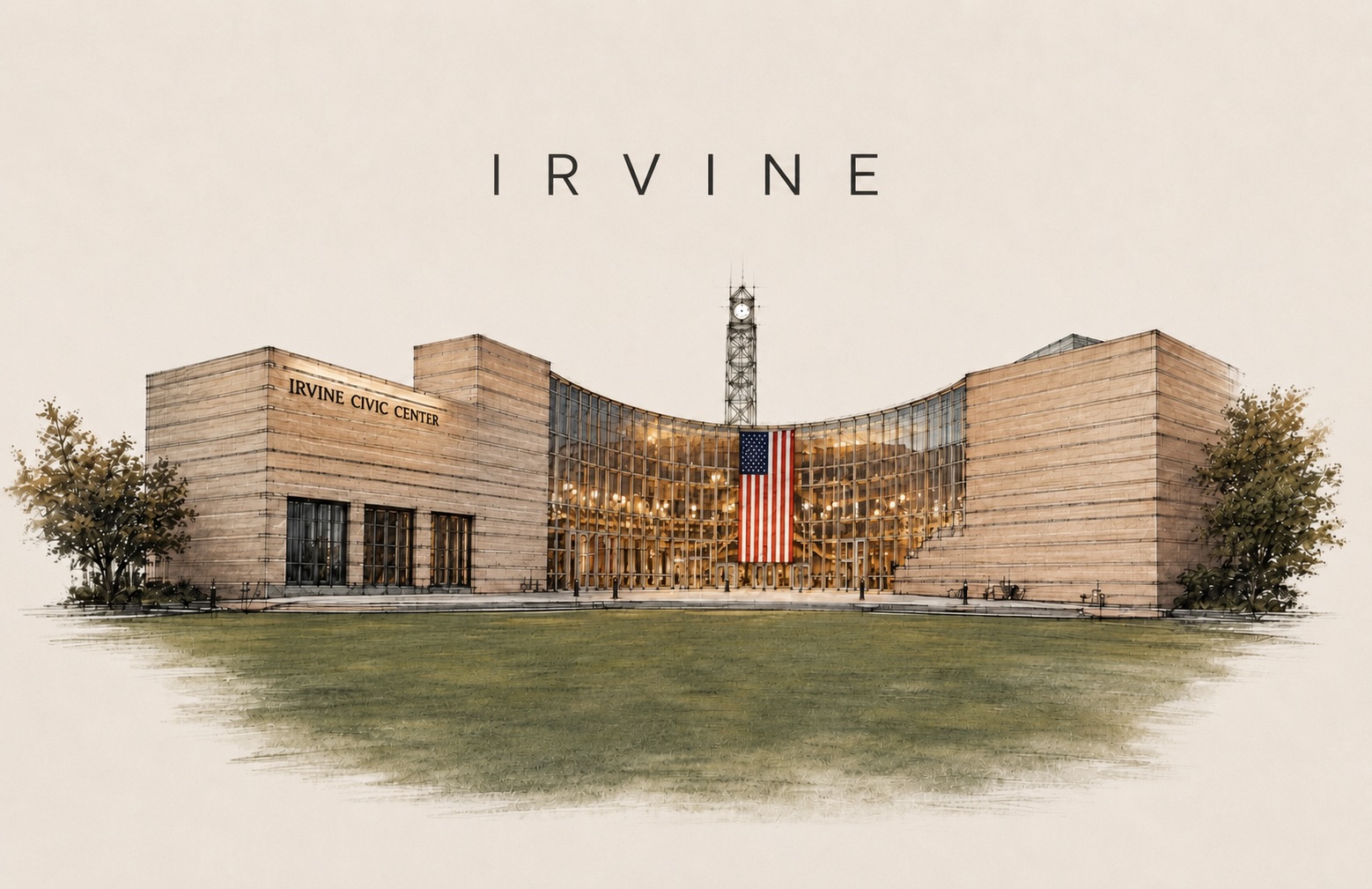
Irvine
Obsessively planned, supremely executed, short on character
At a Glance
Irvine is what happens when you give master planners broad resources and few historical constraints. The schools are widely sought after. The streets are orderly. Your neighbors include professionals from many countries. The tradeoff: it can feel like living in a very nice airport terminal. Everything works, little surprises, and the sense of place is something you bring with you rather than find here.
This is a city designed for optimization, not character. You come here for school reputation, predictability, corporate campus jobs, and the fact that little ever feels broken. You don't come here for walkable charm or unexpected discoveries. Irvine is honest about what it is: a machine that delivers suburban comfort with limited friction, even if that means giving up a little texture along the way.
The Big Picture
Irvine started in the 1970s as a master-planned community backed by the Irvine Company, which still owns large parcels of the city. This wasn't suburban sprawl; it was suburban planning taken to a logical extreme. The result is a city where shopping centers are proportioned consistently, streets follow tree plans, and you'll rarely find yourself on an unexpectedly charming block.
Today Irvine punches above its weight as a corporate HQ hub. Blizzard Entertainment, Broadcom, and Taco Bell have anchored major campuses here, alongside dozens of mid-tier tech, medical device, and aerospace firms. The city is internationally oriented and deeply tied to tech, healthcare, education, and professional work. Its schools are a major demand driver for many owner-occupier households.
The Highlights
Irvine is a master-planned city built from the 1970s onward by the Irvine Company, and the planning is visible in everything: consistent street grids, proportioned shopping centers, and manicured common areas. Schools are widely sought after; the Irvine Unified School District is a primary driver of owner-occupier demand, though school assignment still needs to be verified by address. The corporate job base is substantial: Blizzard Entertainment, Broadcom, and Taco Bell have major campuses here, alongside dozens of tech, medical device, and aerospace firms. The dining picture is uneven on the surface (chains dominate the visible landscape), but Korean, Chinese, Vietnamese, and upscale dining exist in specific corridors for those who look. The Irvine Barclay Theatre and public art programs provide curated cultural infrastructure; Irvine Spectrum Center is walkable from nearby apartments and has shops, restaurants, and a movie theater.
Housing consists mostly of newer suburban subdivisions and planned communities. Pricing is among the higher tiers in Orange County, with HOA fees and Mello-Roos adding to the monthly cost of ownership.
Lifestyle
Daily life in Irvine is frictionless by design. You drive to a shopping center, park close, buy what you need, return home. Parks are manicured. Dining leans toward chains and upscale chain-adjacent, though pockets of strong Korean, Chinese, and Vietnamese food exist in specific corridors. The city has invested heavily in cultural facilities (the Irvine Barclay Theatre, public art programs), but they feel more curated than organic.
The outdoors exist here but feel imported: Shady Canyon Drive is scenic, some small parks are pleasant, and you can hike nearby in the regional wilderness areas. But there's no dominant outdoor lifestyle like you'd find in beach towns. The weather is pleasant year-round. People work, eat out occasionally, spend weekends on activities or day trips to beaches or mountains.
Housing
Housing in Irvine is among the more expensive inland Orange County searches. You're paying for school reputation, predictability, employment access, and the Irvine Company's reputation for maintaining common areas. The housing stock consists mostly of newer suburban subdivisions and planned communities: attached townhomes or master-planned single-family developments. Architectural variety is limited. Verify current pricing, HOA dues, Mello-Roos, and the right comp set with a licensed agent for any specific budget.
The rental market is expensive but significant, shaped by corporate relocation and international employment patterns that lead many residents to rent before deciding where to buy. The apartment complexes are newer and well-maintained, though they reinforce the sense of temporary residence.
The Tradeoffs
The big one is character. Irvine is optimized to the point of a cookie-cutter feel: nothing rough around the edges, nothing that happened organically, nothing that predates the master plan. For many people that's the feature: predictability and order you can count on. For others it's a quiet kind of boredom. You won't stumble into a weird coffee shop or discover an underrated taco truck by accident. Someone already planned all of this, and they planned it well.
The other tradeoff is authenticity of place. Irvine has limited historic core or sense of lineage that predates 1975. It's a manufactured environment, which is fine if you're aware of the tradeoff going in. Traffic on major arterials is significant during commute hours. The cost of living is among the higher tiers in Orange County.
Finally: this is not a creative or bohemian place. If you're an artist, musician, or anyone seeking an unconventional lifestyle, Irvine's orderliness may feel like a gentle cage, no matter how nice the parks are.
Quick Answers
What are the schools really like?
Irvine schools are widely sought after, but school assignment and fit still need to be verified by address. A district name does not replace campus-level research.
Is it safe?
Irvine is broadly perceived as orderly and low-friction, and public safety is one reason many households consider it. Review current public crime data by neighborhood rather than relying on a citywide slogan.
What's the commute situation?
Variable. If you work in Irvine proper, you might have a short drive. If you work in Long Beach or central LA, the commute can become difficult depending on traffic. I-5 and I-405 are the primary routes and both get congested.
Is there nightlife or culture?
Limited. Irvine has some upscale restaurants, planned cultural venues (the Barclay), and occasional events. But there's no concentrated restaurant scene, no bar district, no live music venue culture. Nightlife mostly happens elsewhere or online.
What's the food situation?
Good if you know where to look: Korean, Chinese, Vietnamese, and upscale dining all exist in specific corridors. Chains dominate the visible landscape, so the strongest spots are easier to find once you know the city.
Can you walk to anything?
Irvine Spectrum Center is walkable from some nearby apartments and has shops, restaurants, and a movie theater. But broad walkability is limited. This is a car city by design.
Who else lives here?
Short commutes to tech and finance jobs, strong school access, and proximity to corporate relocation packages are the main pulls. The population skews affluent, educated, and more globally oriented than many OC suburbs.
Should I move here?
If school access is a top priority, or if you work in tech/finance/healthcare or value maximum suburban predictability, Irvine may fit. The premium you pay is for schools, predictability, and low-friction daily life. Make sure that's what you actually value.
Ethan Hauptli is a California-licensed REALTOR® (CA DRE #02191280) at Real Broker (CA DRE #02022092). This city guide is editorial content published by Venture: Orange County and is not a solicitation for the purchase or sale of any specific property. Information is general and does not constitute real estate, legal, financial, or tax advice. Consult a qualified professional before making decisions.
What's happening here
Local voices and insights from the community