Orange
Historic downtown circle with active cultural scene, Chapman University anchor
At a Glance
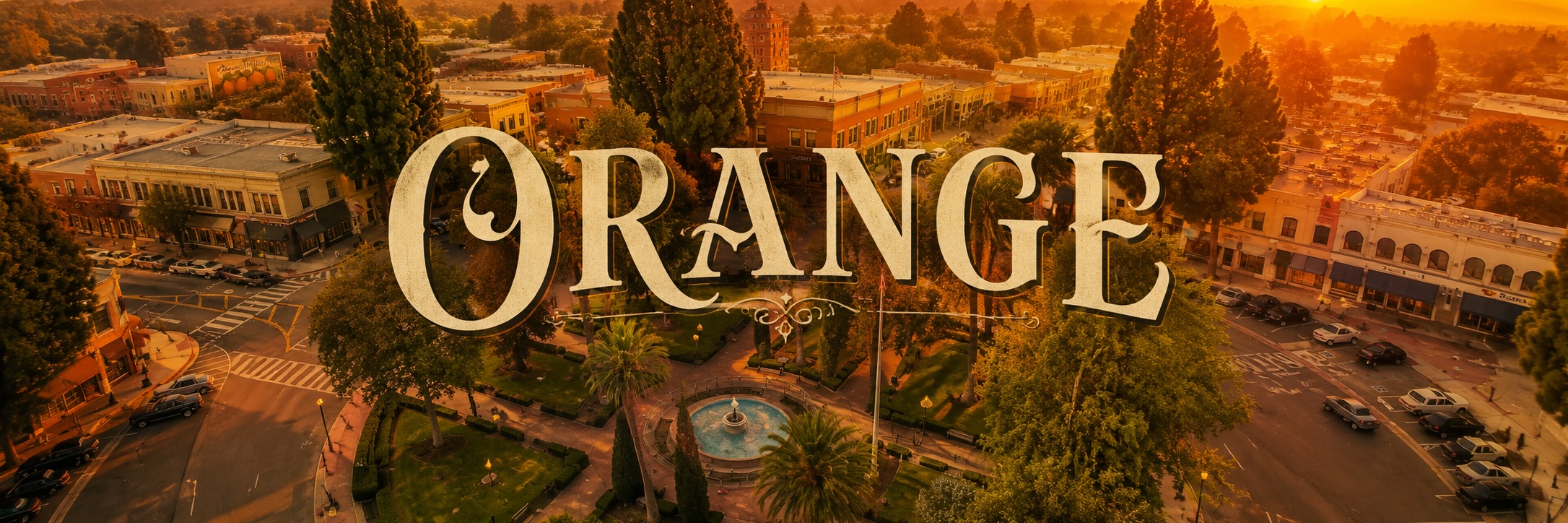
Orange is one of Central OC's most distinctive cities, defined by its historic downtown Circle: a literal traffic circle laid out in the 1880s that still functions as the civic and commercial center. Chapman University's campus wraps around the downtown and drives a restaurant and cultural investment wave that has made the Circle one of OC's more compelling urban destinations. The city has genuine walkable neighborhoods with period architecture. This is one of OC's more European-feeling cities, and it's considerably larger and more varied than its iconic downtown suggests.
The Big Picture
Orange covers roughly 25 square miles in Central OC. A common misconception is that the city is just the compact Old Towne Historic District (roughly one square mile). The full city is much larger, encompassing diverse neighborhoods from the walkable downtown core to the sprawling equestrian estates of Orange Park Acres to the east, hospital and university districts, and suburban residential blocks. Chapman University's student body has become a primary driver of urban investment in the historic core. The city is accessed via I-5, CA-55, CA-22, and CA-57.
The Highlights
Old Towne wraps around the historic Plaza Circle: walkable and historic, with one of Central OC's better dining scenes (Gabbi's Mexican Kitchen, Urth Caffé, and a deep bench of independents). Chapman University anchors the cultural calendar with theater, music, and lectures open to the public. Antique shops line the blocks radiating from the Circle, and a Saturday farmers market runs in the historic core. East of downtown, Orange Park Acres has equestrian trails and estate-sized lots. Disneyland sits about 10 minutes away; the coast about 20.
Lifestyle
The Old Towne core revolves around the Circle and Chapman campus: coffee at local shops, shopping on North Glassell Street, Chapman cultural events (theater, music, lectures) open to the public, and a maturing dining scene. Gabbi's Mexican Kitchen and Urth Caffé anchor the Circle's growing dining identity. Weekends include the antique shops and farmers market, day trips to Disneyland (about 10 minutes) or the beach (about 20 minutes). The eastern parts of the city are quieter, more car-dependent, and oriented around equestrian trails and suburban park life.
Housing
The market in Orange spans a wide range depending on which part of the city. Old Towne single-family homes near the Circle generally command a premium over the broader citywide median, reflecting walkability, character, and Chapman proximity. The broader citywide market tracks closer to the wider OC median. Condos and new construction near the stadium and hospital districts generally price below SFR. Orange Park Acres estates (larger lots, equestrian zoning) command meaningful premiums for lot size and acreage. Old Towne housing stock is predominantly 1920s–1960s, meaning character alongside renovation costs. Verify current pricing with a licensed agent.
The Tradeoffs
Old Towne's older housing stock requires budget for deferred maintenance. Parking around the Circle is limited and metered. Chapman creates weekend noise and parking competition during the academic year. Outside Old Towne, the city's character shifts significantly. If you're buying in the suburban eastern neighborhoods expecting the walkable downtown vibe, you won't find it. Commute to LA runs roughly 50–90 minutes at peak hours. You gain authentic neighborhood character; you lose suburban quiet and predictability.
Quick Answers
What does housing cost in Orange?
Old Towne SFR commands a premium over the broader citywide median for walkability and character; the broader citywide median tracks closer to the wider OC median; condos near the hospital and stadium districts generally price below SFR; Orange Park Acres estates command meaningful premiums for lot size. Verify current pricing with a licensed agent.
How big is Orange?
Roughly 25 square miles: much larger than the Old Towne Historic District (about 1 square mile) most people picture. The city includes diverse neighborhoods from walkable downtown to equestrian estates in Orange Park Acres.
How are the schools?
Orange Unified School District is well-regarded in OC reporting. School performance varies by attendance zone; verify school assignment by address before buying.
Is Orange well-suited for owner-occupiers?
Yes. A well-regarded school district, walkable Old Towne for neighborhood life, Chapman cultural events, and proximity to Disneyland make it a community-oriented city. Different neighborhoods suit different household styles.
What are the best neighborhoods?
Old Towne / The Circle area (walkable, historic, highest demand); Orange Park Acres (equestrian, large lots, eastern edge); hospital district condos for newer construction.
How far is Orange from the beach?
Huntington Beach: roughly 20 minutes. Laguna Beach: roughly 25–30 minutes. Disneyland: roughly 10 minutes.
What's the commute like?
Irvine via I-5: roughly 20–30 minutes. Newport Beach via CA-55 South: roughly 20–30 minutes. LA via I-5: roughly 50–90 minutes at peak; budget conservatively.
Is the dining scene good?
Genuinely good and growing. Gabbi's Mexican Kitchen and Urth Caffé anchor a Circle dining scene that has become one of Central OC's better destinations.
Ethan Hauptli is a California-licensed REALTOR® (CA DRE #02191280) at Real Broker (CA DRE #02022092). This city guide is editorial content published by Venture: Orange County and is not a solicitation for the purchase or sale of any specific property. Information is general and does not constitute real estate, legal, financial, or tax advice. Consult a qualified professional before making decisions.
What's happening here
Local voices and insights from the community