Santa Ana
County seat with Latino culture and emerging arts energy
At a Glance
Santa Ana is the county seat and one of Orange County's larger cities. It has a strong Latino cultural identity, a growing downtown arts scene, and some of the county's most serious neighborhood food corridors.
This is not the polished master-planned version of OC. If you want a city with cultural character, independent restaurants, immigrant communities, walkable pockets, and creative energy emerging from the ground up, Santa Ana deserves a careful look.
The Big Picture
Santa Ana was founded in 1869 and has served as the county seat since 1889. The city's Latino identity grew through the second half of the 20th century as Mexican, Central American, and other immigrant communities shaped the city's culture, commerce, and daily life.
Downtown investment, arts programming, and local food culture have made Santa Ana harder to ignore. The city is increasingly recognized as a deeply cultural, genuinely urban OC community.
The Highlights
Santa Ana is the county seat, founded in 1869, and one of OC's most culturally distinct cities. The Latino identity is structural, not decorative: Mexican, Salvadoran, and broader Central American food culture run through the city's restaurants, street vendors, and commercial corridors in ways that set it apart from the rest of the county. Downtown has galleries, performance spaces, coffee shops, and a monthly art walk energy (First Saturday ArtWalk) that draws visitors from across OC. Main Street, Fourth Street, and the arts district are the most walkable pockets; beyond those, a car remains useful.
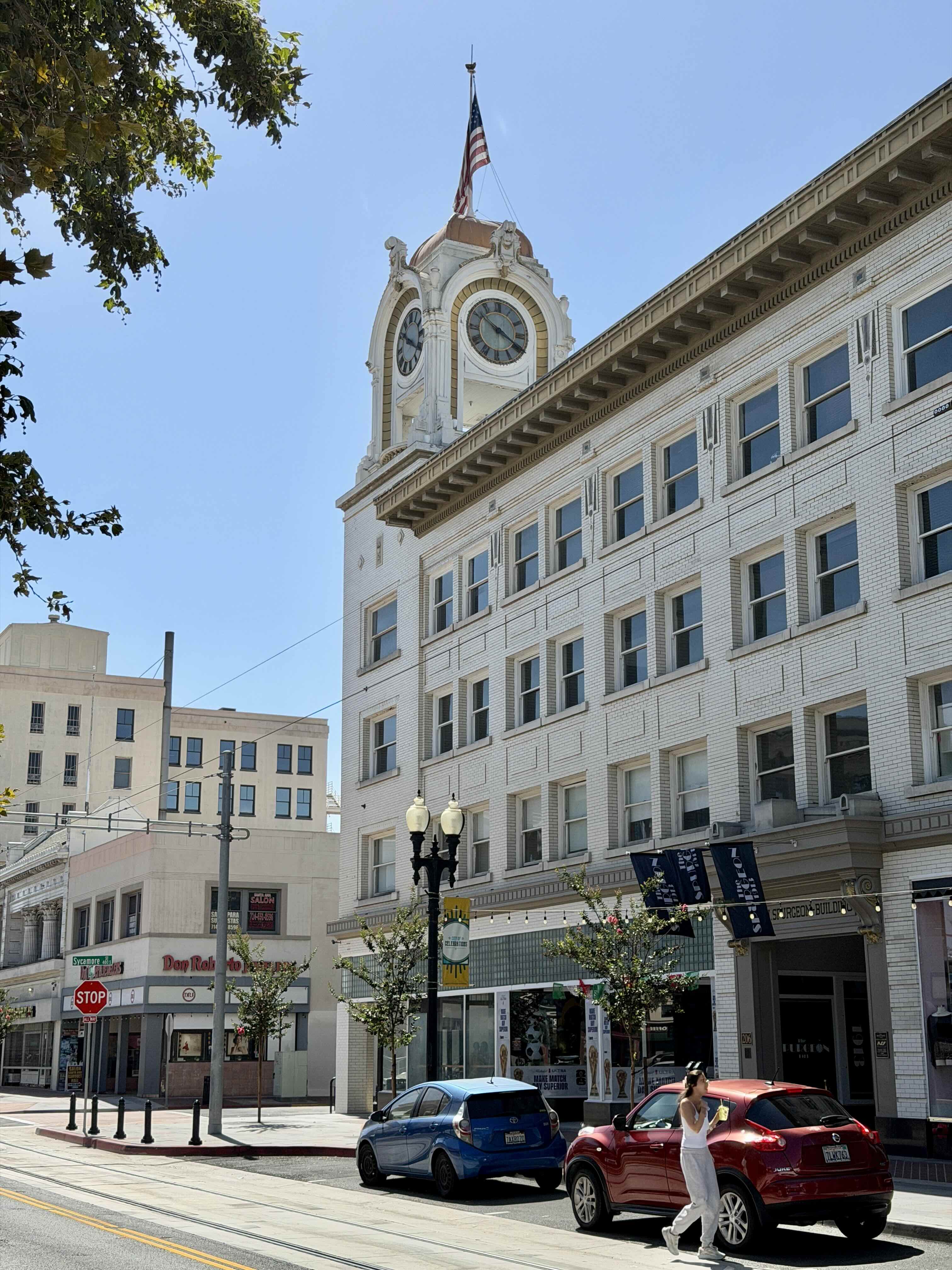
The OC Streetcar, OCTA's modern streetcar line built to run between the Santa Ana Regional Transportation Center (SARTC) and Harbor Boulevard in Garden Grove via Fourth Street, threads directly through the downtown core. It is the most significant piece of new transit infrastructure the city has seen in decades: vehicles began street testing in early 2026, passenger service is currently expected in 2027, and the line is already shaping commercial zoning conversations and buyer attention along the Fourth Street and SARTC corridors.
Housing stock is older and highly block-specific. Condition and pricing vary significantly, and current data should be verified with a licensed agent. Schools vary by campus and program; verify assignment, performance, and program fit by address rather than relying on a citywide label.
Lifestyle
Daily life in Santa Ana is fundamentally different from planned OC suburbs. You encounter street vendors, murals, independent restaurants, public buildings, and older commercial corridors. Mexican, Salvadoran, and broader Central American food culture are central to the experience. Downtown has galleries, performance spaces, coffee shops, and First Saturday ArtWalk-style art energy that draws visitors from across the county.
The overall aesthetic is urban and working-class, not resort-polished. That is the appeal for some people and the tradeoff for others.
Housing
Santa Ana is often more accessible than many coastal and master-planned OC markets, but it is highly block-specific. You are often buying older homes in urban neighborhoods, and condition can vary widely. Property values and rents have moved as the city's reputation and downtown investment have changed, so current pricing, rental data, and property condition need to be verified with a licensed agent for any specific budget. The OC Streetcar corridor along Fourth Street is a piece of that calculus for downtown-adjacent inventory; ask your agent how the line is affecting recent comps in the immediate corridor.
The Tradeoffs
Santa Ana is genuinely urban. Noise, density, visible poverty, and street issues are more visible here than in polished OC suburbs. Public safety varies by block and reporting area, so use current public data and direct neighborhood visits before house-hunting.
Schools vary by campus, program, and address. If schools are part of the search, verify assignment, performance data, and program fit directly rather than relying on citywide shorthand.
Gentrification and displacement are real concerns. As the city's reputation improves, rents and property values can rise, and long-time working-class residents can face pressure. The cultural character that makes Santa Ana interesting should not be treated as a marketing prop.
Quick Answers
What's the food really like?
Strong. Mexican, Salvadoran, and broader Central American cooking are major strengths, with plenty of independent places that reward local knowledge.
What's the arts scene actually like?
Growing and genuine. Downtown galleries, performance spaces, public art, and monthly art walks give Santa Ana one of OC's more active creative cores.
How diverse is it?
Very. Santa Ana has a strong Latino identity and a long history of immigrant communities shaping local culture and business.
How should buyers evaluate safety?
By neighborhood, block, and current public data. A citywide label is not useful enough for a housing decision.
What about schools?
Verify by address. Campus performance, programs, transfers, and student fit matter more than citywide reputation.
Is it gentrifying?
Yes, especially around downtown and arts-oriented corridors. That can bring investment and displacement pressure at the same time.
Is downtown walkable, and what about transit?
Main Street, Fourth Street, and the arts district are increasingly walkable. The OC Streetcar will run along Fourth Street between the Santa Ana Regional Transportation Center (SARTC) and Harbor Boulevard in Garden Grove, threading the downtown core; the line is in testing, with passenger service currently expected in 2027. Beyond those pockets, a car is still useful.
Should I consider living here?
If you value urban culture, comparative affordability, walkable pockets, and authentic neighborhood energy, yes. If you want a controlled suburban environment, compare carefully.
Ethan Hauptli is a California-licensed REALTOR® (CA DRE #02191280) at Real Broker (CA DRE #02022092). This city guide is editorial content published by Venture: Orange County and is not a solicitation for the purchase or sale of any specific property. Information is general and does not constitute real estate, legal, financial, or tax advice. Consult a qualified professional before making decisions.
What's happening here
Local voices and insights from the community