
Read what matters
Guides, stories, and honest takes written for people who want to know Orange County beyond the surface.






























Culture
October 19, 2026
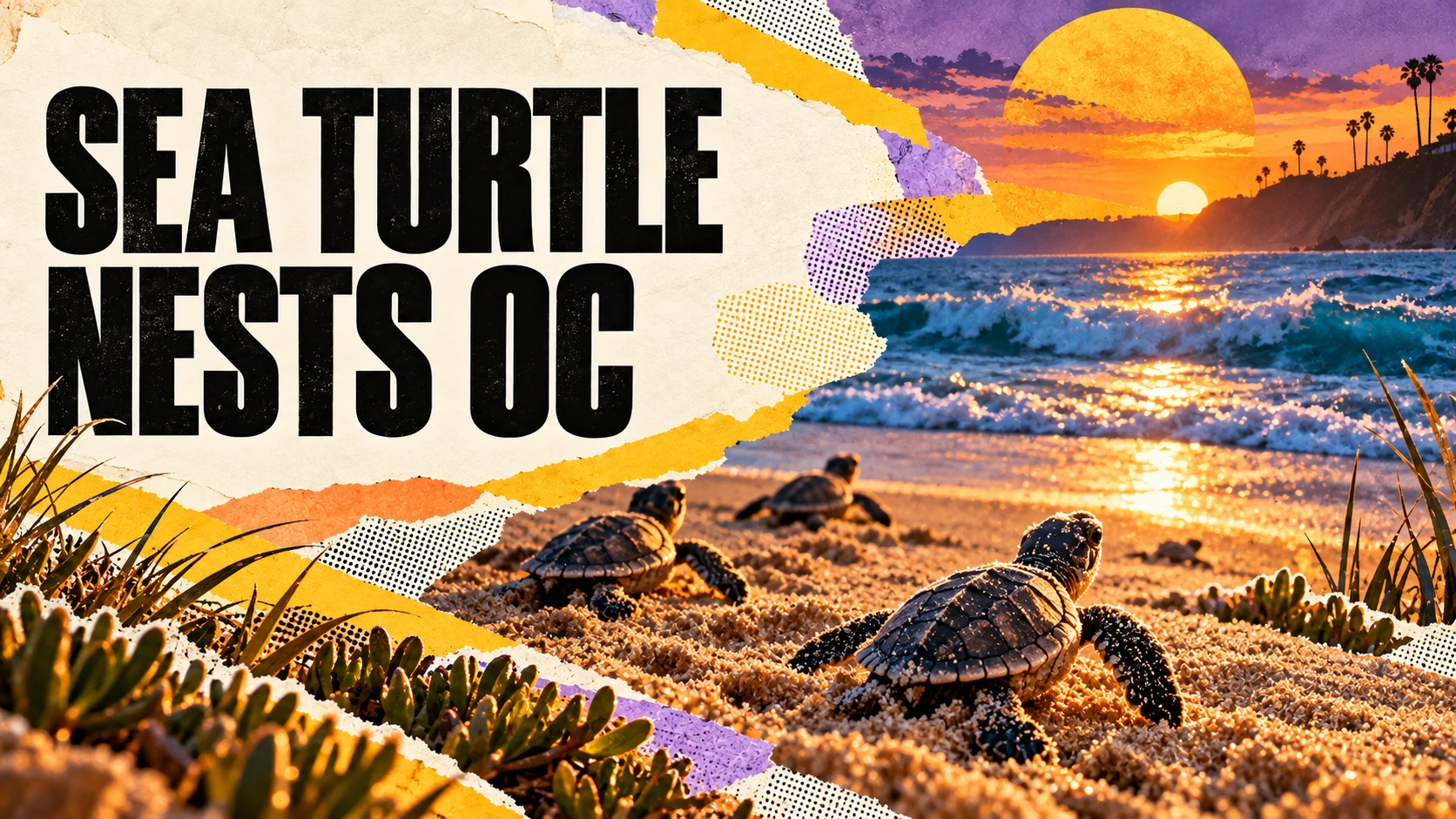
Sea Turtles Nest in Orange County, First Ever on the US West Coast
In September 2026 two olive ridley sea turtles laid eggs on Seal Beach and Huntington Beach. NOAA calls it the first-ever on the US West Coast.
On September 16, 2026 an olive ridley sea turtle came ashore near Seal Beach and dug a nest in the sand. Three days later a second olive ridley nested about eight miles up the coast, near the Huntington Beach Pier. NOAA Fisheries, which confirmed through photo-ID analysis that the two turtles were different animals, calls it the first-ever recorded sea turtle nest of any species on the US West Coast.
What that means, in short: this stretch of Orange County coastline is now a documented sea turtle nesting site. Whether it stays one is the question NOAA is tracking.
What Happened
The Seal Beach nest went down on the night of September 16. The Huntington Beach nest followed on September 19. On September 25 an inter-agency team moved both clutches to the Aquarium of the Pacific in Long Beach, ahead of a storm swell that would have risked the nests. The eggs are now incubating in sand-filled containers at the Aquarium's Molina Animal Care Center.
Egg counts: the Aquarium says "approximately two hundred" between the two nests. News reports (NBC Los Angeles, KTLA) have cited 104 from Seal Beach and 100 from Huntington Beach, which lines up with the Aquarium's figure.
Why Orange County
Olive ridleys are the smaller end of the sea turtle size spectrum, and they nest along warm beaches in the eastern Pacific. Until September, the closest confirmed nesting was near Todos Santos, Baja California, roughly 700 miles south. NOAA attributes the Orange County arrivals to warmer-than-usual sea-surface temperatures from recent marine heatwaves, with an incoming 2027 El Nino likely reinforcing the pattern. Translation: this is not a coincidence event. It is a shift in where the species is finding suitable nesting conditions.
What Happens Next
Olive ridley incubation typically runs 45 to 60 days. That math puts the Seal Beach nest's hatch window at roughly October 31 to November 15, and the Huntington Beach nest's at November 3 to November 18 (computed, not official). NOAA has emphasized two caveats: it is unknown whether the eggs were fertilized, and viability is uncertain. If they do hatch, the hatchlings will be released on the same two beaches where the nests were laid.
No official hatch or release date has been announced. The Aquarium of the Pacific and NOAA are the authoritative channels for any update.
How to Help
If you see a turtle, a nest, or disturbed sand on either beach, NOAA's guidance is clear: do not disturb it, do not touch the fencing, and report the sighting. The hotline is (562) 506-4315, or tell the nearest lifeguard. The agency's point is that leaving the nests alone is the best thing anyone can do for them.
Where to Walk the Coast
If you want to visit the two beaches without disturbing the nesting sites, both are accessible via existing public access points. The Seal Beach Pier and Main Street walk covers the Seal Beach side; the Huntington Beach Pier sunset walk covers the HB side. For a deeper look at the OC coast's protected habitat work, the Bolsa Chica Ecological Reserve sits just north of the HB nest site.
What makes the September nests significant is not the individual turtles. It is what they tell us about the Pacific coast as a nesting range. If this becomes a pattern, Orange County beach management, lifeguarding, and conservation posture all have to adapt. The next few weeks will say a lot about which direction this story goes.